

SUNSHINE AT MILKY WAY
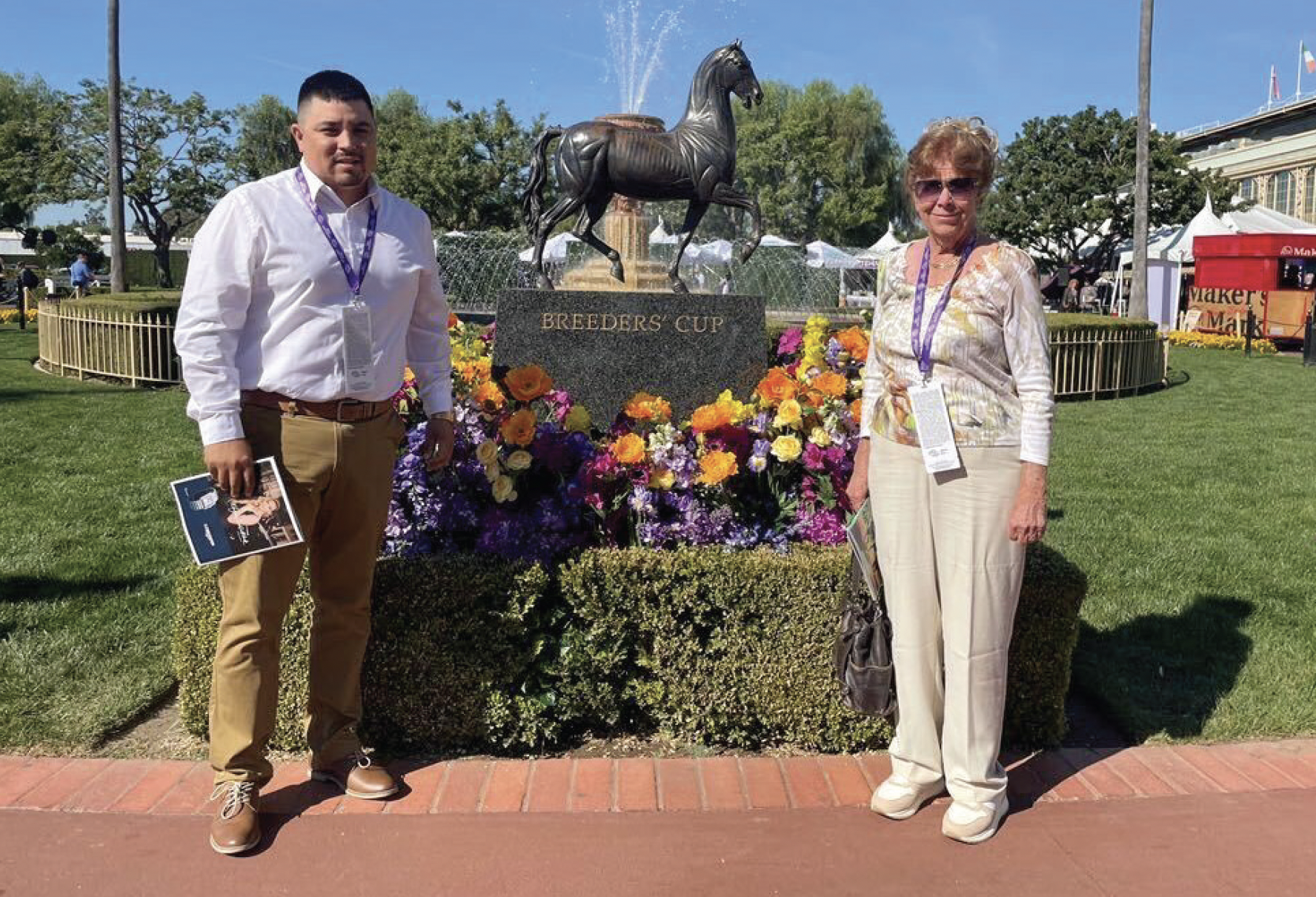
Johnny Alvira, now a partner and the farm manager at Milky Way, attends a Breeders’ Cup at Santa Anita with Madsen
You don’t have to look very hard these days to find negativity on the state of California racing and breeding. Tracks have shuttered, field sizes are shrinking, purses are stagnant, broodmare and foal counts are declining as farms close.
But you’ll never hear any of that coming from Milky Way Farm’s owner Linda Madsen. It’s not that the Temecula horsewoman doesn’t see the problems. She believes that the California racing industry will always find a way to keep the sport viable despite all the setbacks.
The “doom and gloomers” have always been around, she said, “but there are a lot of positives in California racing. The people we see here at the farm are all really positive (about the future). I’m an optimistic person; I’ve always been that way. We’re always busy, but we’re so much busier now.”
As Madsen noted, “We’ve got the two most beautiful places in the world for racing in Del Mar and Santa Anita. We’ve also got the best weather. That’s why the Breeders’ Cup is held here so often.”
Currently, Madsen is the president of the California Farm Managers, which holds a popular stallion tour show at Milky Way and other farms. They invite not just industry people, but the public as well. The day features a catered lunch, the stallions, of course, and guest speakers.
At last year’s event, Madsen’s friend and longtime bloodstock agent Gayle Van Leer gave a talk on preparing horses for auction. About 90 people attended, Madsen said. At one point Van Leer “asked them how interested they were in selling horses and about four or five people raised their hands. But when she asked how many wanted to own a racehorse, almost everyone’s hand shot up. That really struck me.”
Madsen has always loved horses.
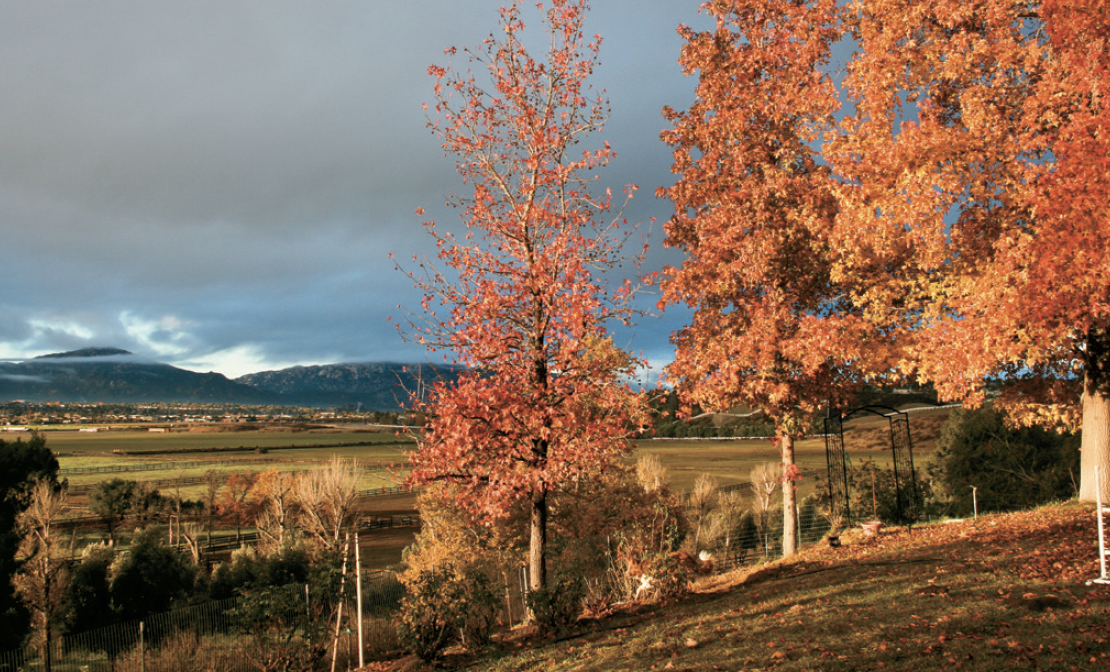
Milky Way Farm started as an Arabian facility but is now devoted exclusively to Thoroughbreds
“I was born in California. I’m never leaving. I’m not retiring either. I love what I’m doing. Every day when I wake up, I realize how lucky I’ve been. I’m up and ready by 5 o’clock every morning. It’s a great life.”
She first started riding when she was 3. By the time she was 11, she was showing champion Arabian horses bred and raised by her parents, Leland and Esther May Makeel. They were giants in the Arabian world, among those named as “Breeders of the Century” in 2000.
They purchased Milky Way in 1965, according to Madsen, and were foaling some 400 Arabian horses per year.
“It was the most exciting thing,” she said. “I was constantly asking myself, ‘How can I be this lucky to be doing this?’”
Madsen also showed champion Guernsey and Longhorn cattle, and the Makeels were named supreme exhibitor at Cal Expo for nine years running, Madsen says. Some of the retired cattle still occupy a small pasture at Milky Way.
“I had the best parents in the whole world. I always did my best in school because I was afraid that if I didn’t, they might take that away.”
She attended Cal Poly Pomona and showed horses there, too. Cal Poly is home to the W.K. Kellogg Arabian Horse Center, the nation’s oldest Arabian horse breeding program.
She married Dr. Larry Seeman, a veterinarian specializing in broodmare care whose clients included El Rancho Murrieta, owned in part by legendary trainer Charlie Whittingham.
Around 2005, the couple, seeing that Arabian horse breeding was shrinking, began transitioning to Thoroughbred care. Whittingham boarded some of his layup horses at Milky Way. So did trainer Mel Stute, whose client Dan Schiffer, who was selling his family farm near Milky Way, needed a place to board his stock along with some horses from other Schiffer clients. That’s how Milky Way became a Thoroughbred facility.
Sadly, both of her parents died during this time, as did Seeman in 2008. It was left to Madsen to carry on.
At Milky Way, Madsen put together a modest stallion roster to begin her breeding business. With the help of Van Leer, she also obtained about 15 Kentucky-bred broodmares. And she’s been at it ever since.
Now with Johnny Alvira as her farm manager and also a partner in the business, the 100-acre Milky Way is a full-service farm. With a staff of 10 and a regular veterinarian in Dr. Celeste Martin, it is a busy place. They bred 250 mares at Milky Way in 2025, Madsen said.
“I have a fantastic staff,” she said.
Her approach to standing stallions is to “pick up sons of really good horses reflecting a variety of pedigrees.” She likes those that have also excelled on the track.
“Everybody wants something different,” she noted, and with more than a dozen stallions on hand, she probably has it.
Multiple graded winner American Theorem will stand his first full season at Milky Way in 2026
One of the sires Madsen wants to promote heavily for the coming year is the big gray 8-year-old American Theorem. He came late to Milky Way in 2025, missing most of the breeding season. The Kretz Racing-owned son of American Pharoah won the Triple Bend (G2) and Bing Crosby Stakes (G1) in succession in 2022 while earning more than $600,000 in his career.
Madsen, with help from Van Leer, continues to import broodmares from Kentucky sales, believing they will provide better opportunities for her young stallions to establish themselves. She now has 50 broodmares at Milky Way. Nearly all her foals go to sales.
“We don’t run many horses at all, though we have sent a few out to (trainer) Antonio Garcia,” she said. “It’s just better for us to sell. When one of our horses wins, we get a nice breeders’ award check. Even if we don’t own the horse anymore, it’s like we do. It feels the same.”
While talking about her optimism for the future, she pointed to a recent trip she made to Del Mar. She was impressed that the track’s purses remain highly competitive.
“One thing I noticed – there was a good crowd there and people were having fun. People want to be there.”